

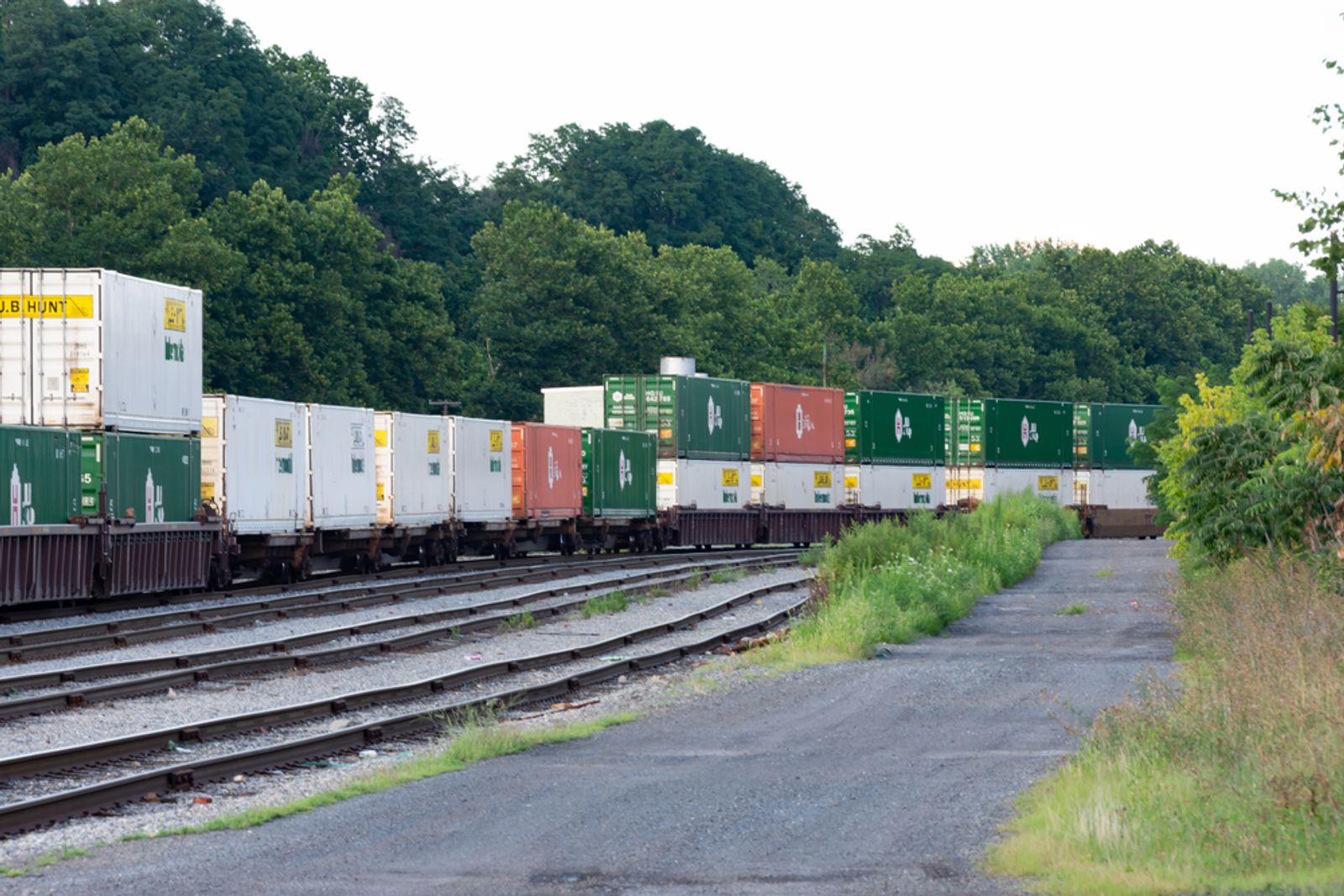
Major US railroads are preparing to demand sharp rate increases from intermodal shippers in upcoming contract renewals, moving aggressively to capitalize on a tightening truckload market and a record-breaking surge in domestic intermodal volume.
Executives with CSX Transportation, Norfolk Southern Railway and Union Pacific Railroad (UP) said most of the volumes within that surge were moved largely on the lower rates negotiated before shrinking truckload capacity and record high diesel fuel prices jolted the surface markets.
With those legacy rates expiring soon, US railroads warn shippers that the 2027 bid cycle will look entirely different.
“We’re in the really early innings of seeing that happen,” Ed Elkins, Norfolk Southern’s chief commercial officer, said on the company’s earnings call Thursday about the pricing push ahead. “There’s an old saying my dad used, ‘You make hay while the sun shines.’ So, we’re exploring every opportunity.”
There are certainly opportunities on the horizon for carriers to exert pricing power. North American railroads hauled more than 2.43 million domestic containers in the third quarter, up 9.5% year over year and a new quarterly record, according to the Intermodal Association of North America (IANA).
Shippers are also saving more money than ever before by converting truckload shipments to rail. The Journal of Commerce Intermodal Savings Index (ISI) shows that intermodal was saving US shippers more than 30% nationally as of Sept. 30, a record high for the index dating back to its inception in 2015.
Kenny Rocker, executive vice president of marketing and sales for Union Pacific, said most intermodal contracts were already locked in before the truckload market tightened. But those contracts are about to expire.
“We’re going to have an opportunity as we move forward here — end of this year, first several months of 2027 — to support the inflection that occurred in the summer,” Rocker said on UP's Thursday earnings call, referring to “stronger pricing” going forward.
Shippers facing tender rejections
For many shippers, the inflection in rates has already begun through tender rejections. As intermodal volumes spiked, private asset-owning intermodal marketing companies such as Hub Group, J.B. Hunt Transport Services, and Schneider National, carefully chose which loads to accept. Price was a factor in those decisions.
When the primary intermodal provider rejects the load, the shipper must call its second or third options to get a container and driver. That deterioration of the routing guide requires paying a premium to backup providers just to secure equipment.
The Journal of Commerce Intermodal Savings Index (ISI) indicates that, excluding fuel, the national intermodal contract average reached $1.24 per mile in the third quarter, a 5% increase year over year that was driven largely by shippers paying to secure backup capacity.
Intermodal contract rates rose 6 cents per mile between the trough in the first quarter and the end of the third quarter, according to the ISI.
However, very little of that repricing happened for shippers using rail-owned boxes.
“There is a lag effect to that and as we’re looking at new renewals on annual contracts ... we’re going to take into account what’s going on out there [in truckload markets],” Maryclare Kenney, CSX’s chief commercial officer, said during the company’s earnings call Wednesday.
The rail pricing push comes as over-the-road truckload carriers prepare to demand even higher rates heading into 2027.
Adam Miller, CEO of Knight-Swift Transportation, the largest for-hire motor carrier in the US, said Wednesday the company will aim for “low- to mid-double-digit” percentage increases on 2027 truckload contracts, although he noted adjustments vary based on whether a shipper conducted a mini-bid over the summer.
If historical cyclical patterns hold, the Journal of Commerce ISI model projects the average intermodal contract in the US will reach $1.32 per mile next year, excluding fuel, as expiring contracts are reset to match current market realities.