

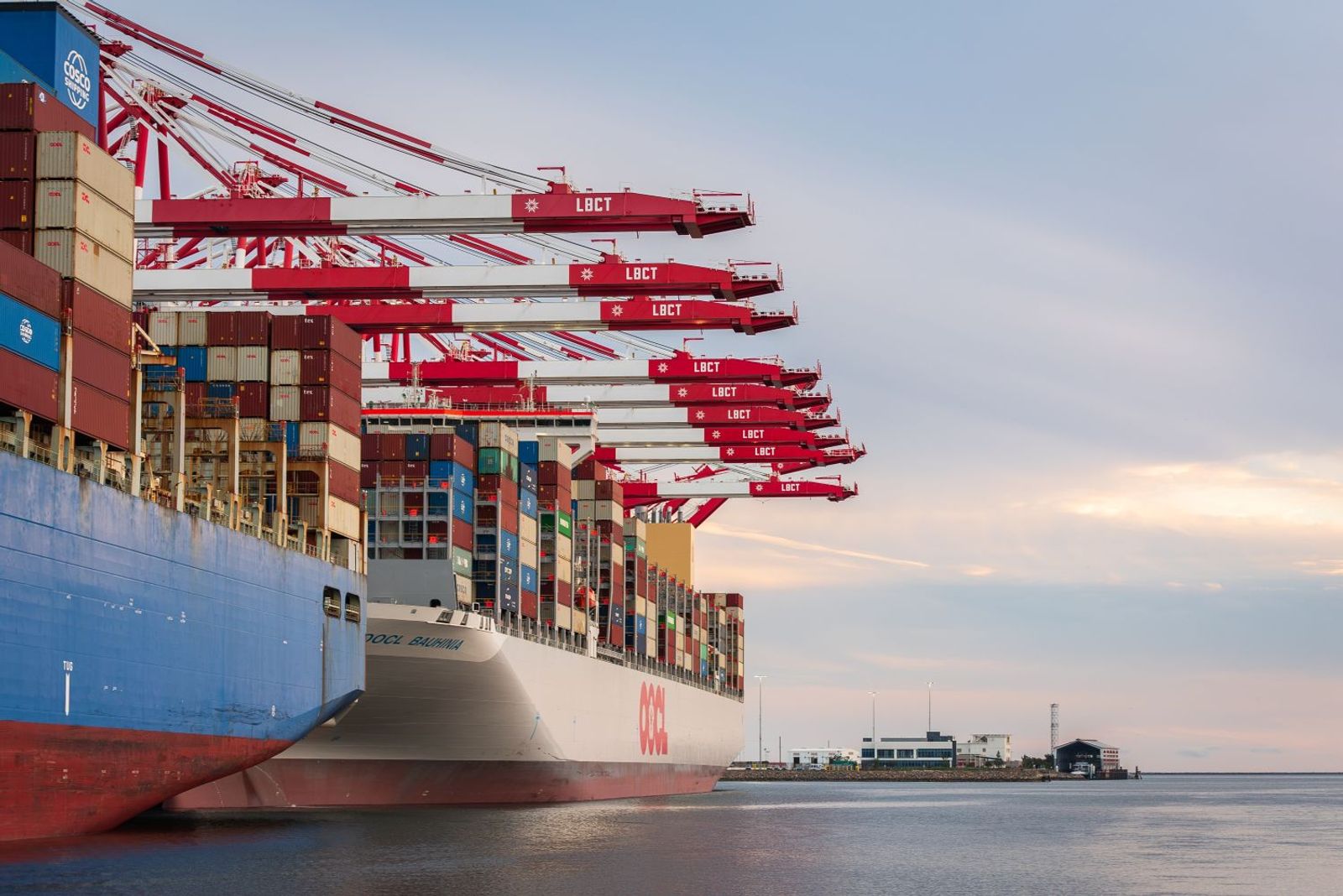
Long Beach Container Terminal (LBCT) is working around the clock to reduce a backlog of rail containers that piled up due to “technical” problems with its ship-to-shore cranes that occurred throughout June, just as US import volumes reached their highest level of the year so far.
LBCT President Anthony Otto told the Journal of Commerce Friday that while the backlog is being reduced steadily, it could persist well into August. The number of containers in the logjam was not available, but fluctuates daily with vessel arrivals and container discharges, he said.
The terminal has been taking the unusual step of operating late night “hoot” shifts for longshoremen to specifically work the rail containers.
“Our container dwells are coming down from a high of seven days,” Otto said. He expects the dwell times for containers that leave LBCT by intermodal rail to return to the terminal’s target level of 3.5 days later in August.
LBCT is the busiest container terminal at the Port of Long Beach in terms of throughput, Otto said.
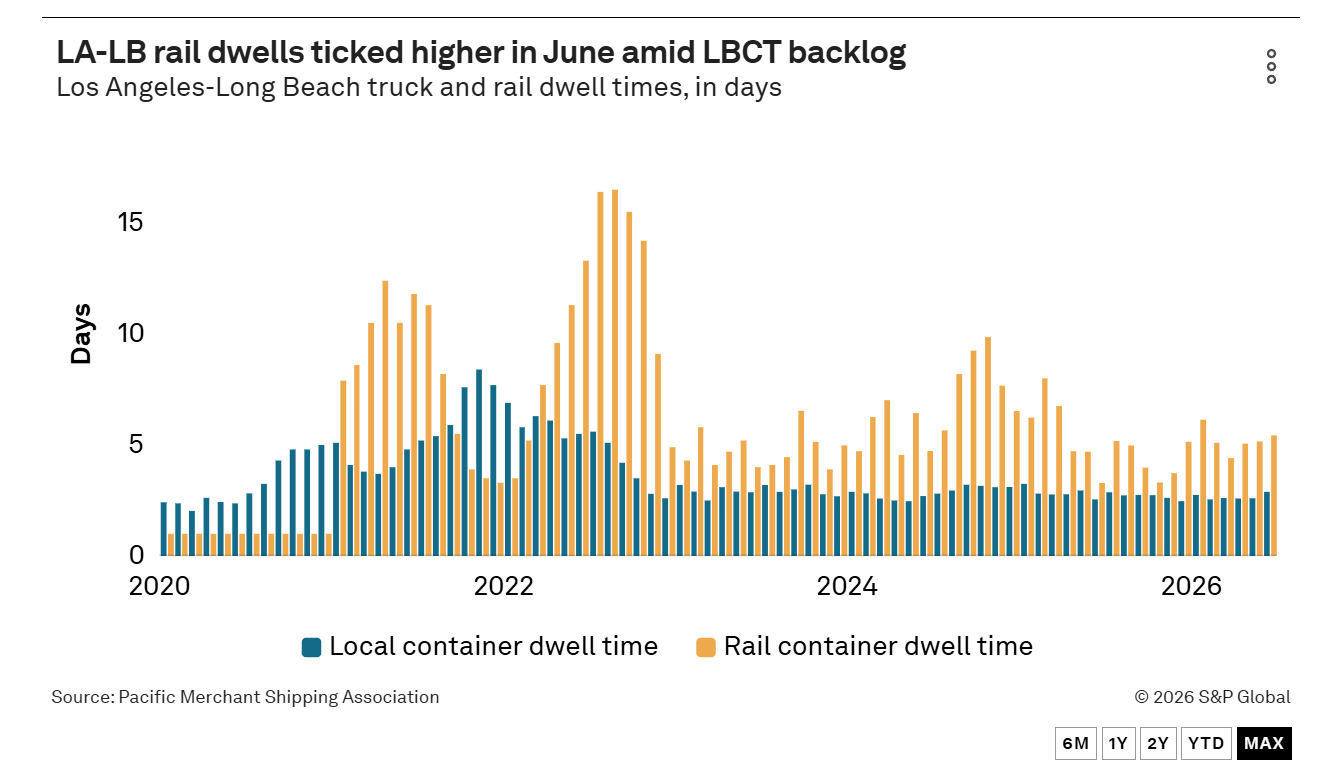
Rail container dwell times at all 12 container facilities in the Los Angeles-Long Beach port complex averaged 5.43 days in June, the second-highest level in the past 14 months behind the 6.14 days recorded this January, according to the Pacific Merchant Shipping Association, which tracks dwell times for all containers that leave the terminals by rail and truck.
Driven primarily by a surge in US imports as retailers rushed to bring their fall and holiday merchandise into the country before the Trump administration reset US tariff policy in late July, Los Angeles-Long Beach handled 881,159 TEUs in June, the gateway’s highest monthly import volume of 2026 so far, according to PIERS, a sister product of the Journal of Commerce within S&P Global.
The benchmark normally cited by the ports of Long Beach and Los Angeles is that one-third of all imports move directly from vessel to inland port intermodal (IPI) rail.
“We’ve been handling very high levels of IPI cargo,” Otto said.