

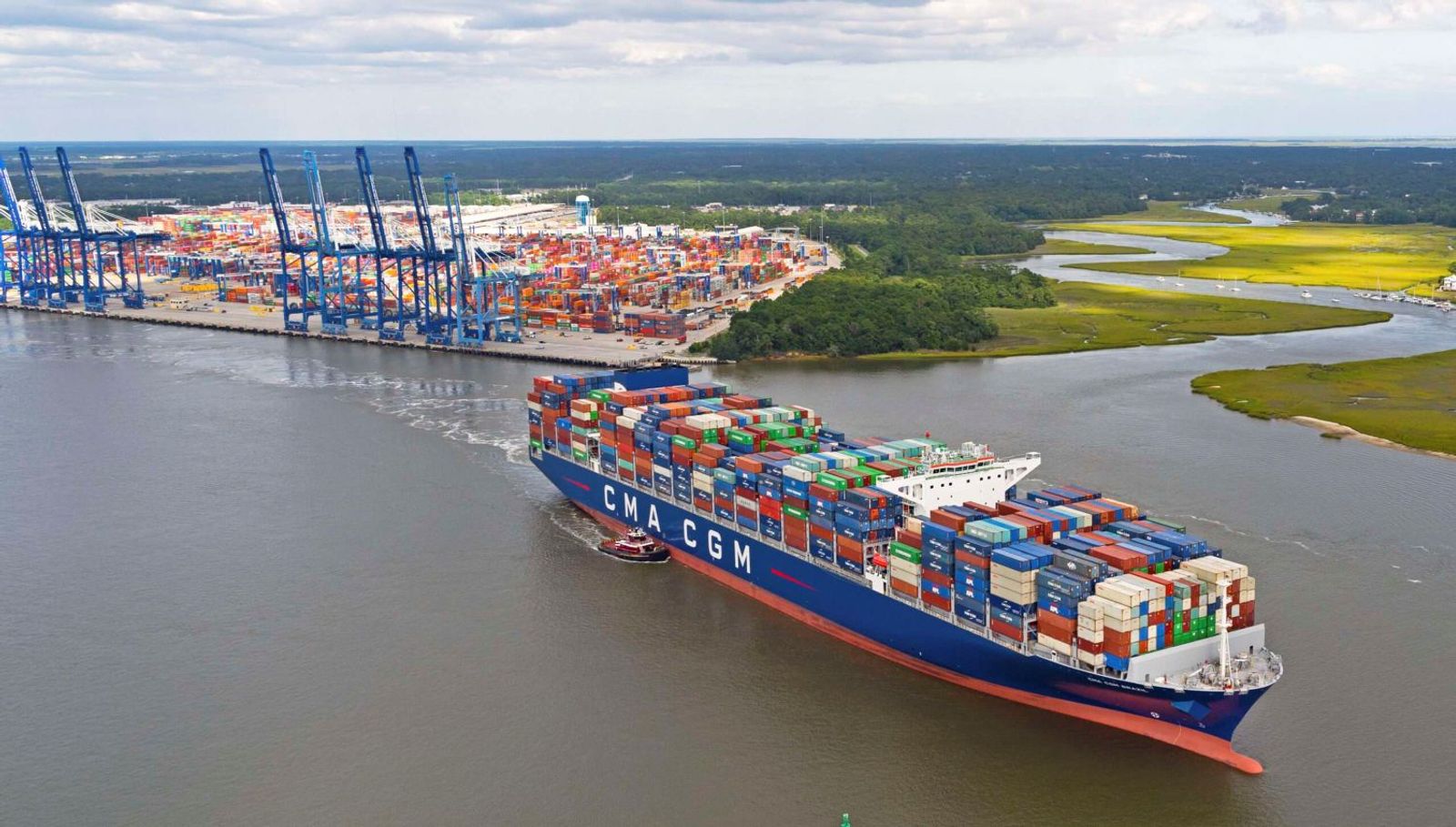
Cargo routed through East Coast ports, including in the Southeast, will likely move increasingly through carrier-controlled terminals, the result of a long-term transformation of the regional port industry now in full swing.
The possibility can’t be ruled out, for example, that carrier-controlled port operations will commence in the next few years at Charleston and Savannah, where the state-operated model has prevailed for decades.
Meanwhile, Maher Terminals, the largest terminal at the Port of New York and New Jersey, is being prepped for sale by Macquarie Infrastructure Partners with a possible price tag of $4 billion to $5 billion, according to one source, a sum within reach for terminal-hungry carriers flush with cash after a six-year run of profitability since the pandemic.
A more favorable climate for expansion of carrier-controlled terminals along the East Coast stems from three main changes: deep-pocketed carriers aggressively pursuing terminal deals; favorable lease terms achieved by the Port of New York and New Jersey at multiple terminals, which is inspiring other East Coast ports to consider similar deals; and clarity around the dockworker union gaining jobs at new terminals once they are opened.
That means the Savannah Container Terminal being developed across the river from the Georgia Ports Authority’s (GPA’s) sprawling Garden City Terminal as a newly opened facility is guaranteed to be manned by workers represented by the International Longshoremen’s Association (ILA) under the current collective bargaining agreement. Because the state cannot, by law, employ unionized dockworkers directly, the facility may be leased out to a third-party operator, possibly one aligned to an ocean carrier.
It also means the Hugh Leatherman terminal at Charleston, where the port waged an unsuccessful legal battle to keep the ILA out, could fall into the hands of a carrier under a lease process being considered by the port.
In Baltimore, Mediterranean Shipping Co.’s Terminal Investment Limited (TiL) is a partner in a project to develop Sparrows Point, a former industrial site, into a 165-acre terminal.
Terminals mean stable, profitable assets
Ultimately, carrier investment in East Coast terminals will expand capacity in a region that has seen little of it while providing shippers in certain cases with the potential for improved service stemming from carriers’ direct control over their facilities.
For carriers, controlling terminals means investing in typically stable and profitable assets made more attractive by their own volumes, as well as priority berthing and cargo handling rates. Carriers directing ships and volumes to their own facilities put the ports where they are located at an advantage versus those ports where carriers are just customers.
The natural strategic alignment between carriers and terminals is why carrier-controlled facilities go back years. At New York-New Jersey, such operations go back to the origins of container shipping in the late 1950s. Maersk has been a terminal operator at the port since the 1970s, while OOCL controlled Howland Hook on Staten Island from 1995 to 2006.
In pursuing terminal deals, carriers are hardly dissuaded by a 62% pay increase achieved by dockworkers in the last contract ratified in early 2025, nor their inability in the US market to collect terminal handling charges to offset what many carriers say are the highest longshore costs in the world.
Southeast ports noticing recent NY-NJ success
Recent deals at NY-NJ that have been favorable to the port have caught the attention of ports in the Southeast.
The 2023 sale of Global Container Terminals’ Bayonne and Howland Hook terminals to CMA CGM, which outbid other carriers including Hapag-Lloyd, was noteworthy because it committed the world’s third-largest carrier to infrastructure improvements, normally the responsibility of the port, while CMA CGM also agreed to share detention and demurrage revenues with the port authority.
Macquarie in December of last year renewed its lease for Maher terminals through 2063, agreeing to terms that include responsibility for upkeep of its wharves and berths, while committing to increase capacity at the largest East Coast port by volume. That lease renewal will set the stage for a formal sale process now getting underway, according to multiple sources.
While NY-NJ is in a strong negotiating position due to the lack of efficient alternatives to serve the large and wealthy New York metropolitan region, how much leverage other ports will have is an open question. For example, allowing an independent or carrier-controlled terminal operator free reign to compete for cargo could undermine states’ common user ports, yet curtailing their activities within lease terms could make those leases less attractive, sources tell JOC.com.
For NY-NJ, the lease terms demanded in return for approving the CMA-CGM purchase stem from the 2000 effort by what was then called Maersk Sealand to bid out its East Coast hub operations, which ultimately secured a favorable lease at New York-New Jersey. According to one source, the controversial move by the carrier led to below-market lease rates that the port was determined to reverse in recent lease negotiations and sale approvals. Such insistence by the port led to the 2014 collapse of a deal by APM Terminals to sell a stake in its Elizabeth terminal to Brookfield, an infrastructure investor.
At Savannah, GPA President and CEO Griff Lynch said in an interview that the port authority is hoping to secure a permit for Savannah Container Terminal this year, with construction slated to begin a few years later in advance of the facility going online sometime in the early 2030s, depending on an assessment of demand.
Lynch said the port is exploring a “partnership” approach whereby the GPA becomes a landlord, leasing the terminal to a third-party terminal operator, not an operator closely aligned to the port similar to the approach at the Port of Virginia, where the port owns the terminal operator, Virginia International Terminals.
There would be less concern about the possibility of a third-party operator aggressively competing with Garden City, he said, if the overall result is more cargo, jobs and economic development opportunity for the state of Georgia.