

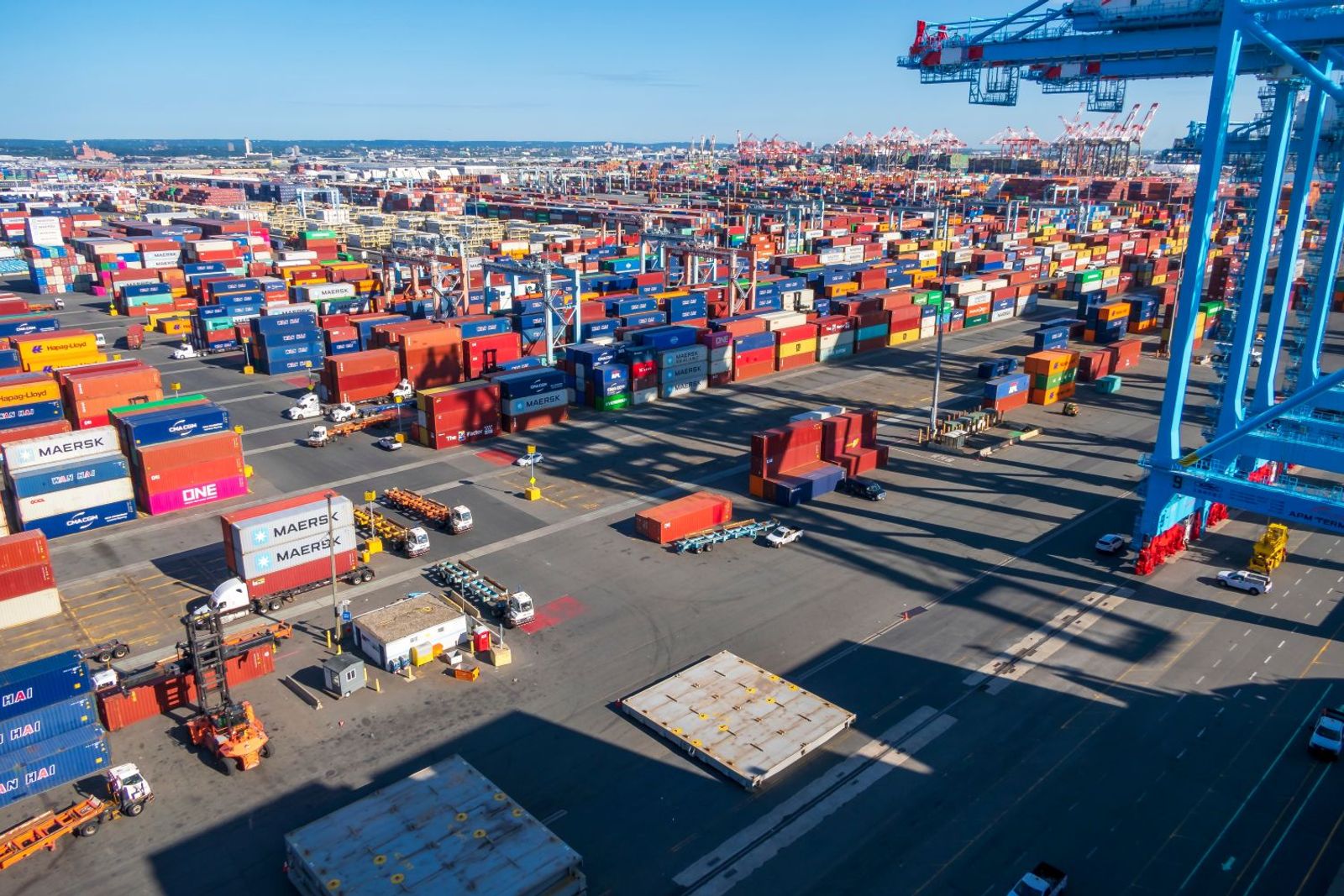
The big picture: Ports along the US East and Gulf coasts rode a similar wave of strong tariff-induced imports in the first half of the year and receding volumes — with some gateways registering double-digit percentage declines — in the second half. Ongoing infrastructure expansion and upgrades will continue this year, and with volumes forecast to remain weak at least through the fourth quarter, coastal competition for discretionary cargoes is likely to heat up.
A look back: Amid an up-and-down year for cargo activity spurred by stop-start US tariff actions, total laden container imports through East and Gulf coast ports rose 2.5% year over year in the first 11 months of 2025, with inbound shipments to the East Coast climbing 3% and Gulf Coast imports ticking up 0.3%, according to PIERS, a sister product of the Journal of Commerce within S&P Global. But those totals don't tell the whole story. For example, annual growth rates at Port Houston, by far the busiest port on the Gulf Coast and a bellwether for the region, ranged from negative 11.5% in February to positive 33.1% in April. The Port of New York and New Jersey, the largest on either coast, handled as few as 354,697 TEUs in June and as many as 420,495 TEUs in August, a nearly 66,000-TEU swing.
Despite the month-to-month volatility, however, East and Gulf coast ports faced few delays in vessel and cargo handling. Container ships spent an average of 27.6 hours on port calls to the US East Coast in 2025 and 33.1 hours on Gulf Coast calls, according to Sea-web, also part of S&P Global, both within the normal range that indicates fluid terminal operations.
The South Carolina Port Authority (SC Ports) in October named Micah Mallace as its new president and CEO. Mallace, who previously served as SC Ports' chief commercial officer before heading up a regional logistics provider, took the helm after Barbara Melvin exited following delays and cost overruns at the Port of Charleston's yet-to-be-completed near-dock rail terminal.
A look ahead: While some East and Gulf coast gateways are expanding their intermodal access to vie for discretionary cargo destined for inland locations, others are moving full speed ahead with capacity expansions that will allow them to handle more and larger ships. The Navy Base Intermodal Facility (NBIF), now expected to begin operations in October 2026, will connect Charleston's marine terminals with Inland Ports Greer and Dillon, increasing intermodal capacity to and from Southeast markets such as Atlanta, Memphis, Nashville and Louisville. Completion of CSX Transportation's Howard Street Tunnel project, expected in the first quarter, will allow for double-stack rail service from the Port of Baltimore, opening additional capacity to Chicago and other Midwest markets.
The Port of Houston is expected to finish widening the ship channel leading into the port's Barbours Cut terminal early in 2026, allowing for more two-way ship transits. A new wharf at Houston's Bayport terminal, also expected at some point in 2026, will allow the terminal to handle five ships simultaneously and, eventually, vessels of up to 17,000 TEUs, which are commonly deployed on trans-Pacific services. After dredging its harbor to 50 feet, which will allow it to serve large container ships, the Port of Mobile and APM Terminals are in the process of completing a container yard expansion and other capital projects that will increase its handling capacity to just over 1 million TEUs per year. The Port of Virginia is expected to complete dredging of its harbor to 55 feet by the end of December, coinciding with the commissioning of new cranes at its Norfolk International Terminal south berth for handling ultra-large container vessels.
The next inflection: Anticipating that ocean carriers will eventually deploy the ultra-large container ships currently serving the Asia-Europe trade on Asia-US East Coast routes, the Port of New York and New Jersey is looking to fund a US Army Corps of Engineers study on the feasibility of dredging to a 55-foot depth, allowing it to handle ships of 18,000 TEUs or more. The Port of Savannah will also complete upgrades to its Ocean Terminal in 2027 that will allow it to handle two post-Panamax ships simultaneously.