

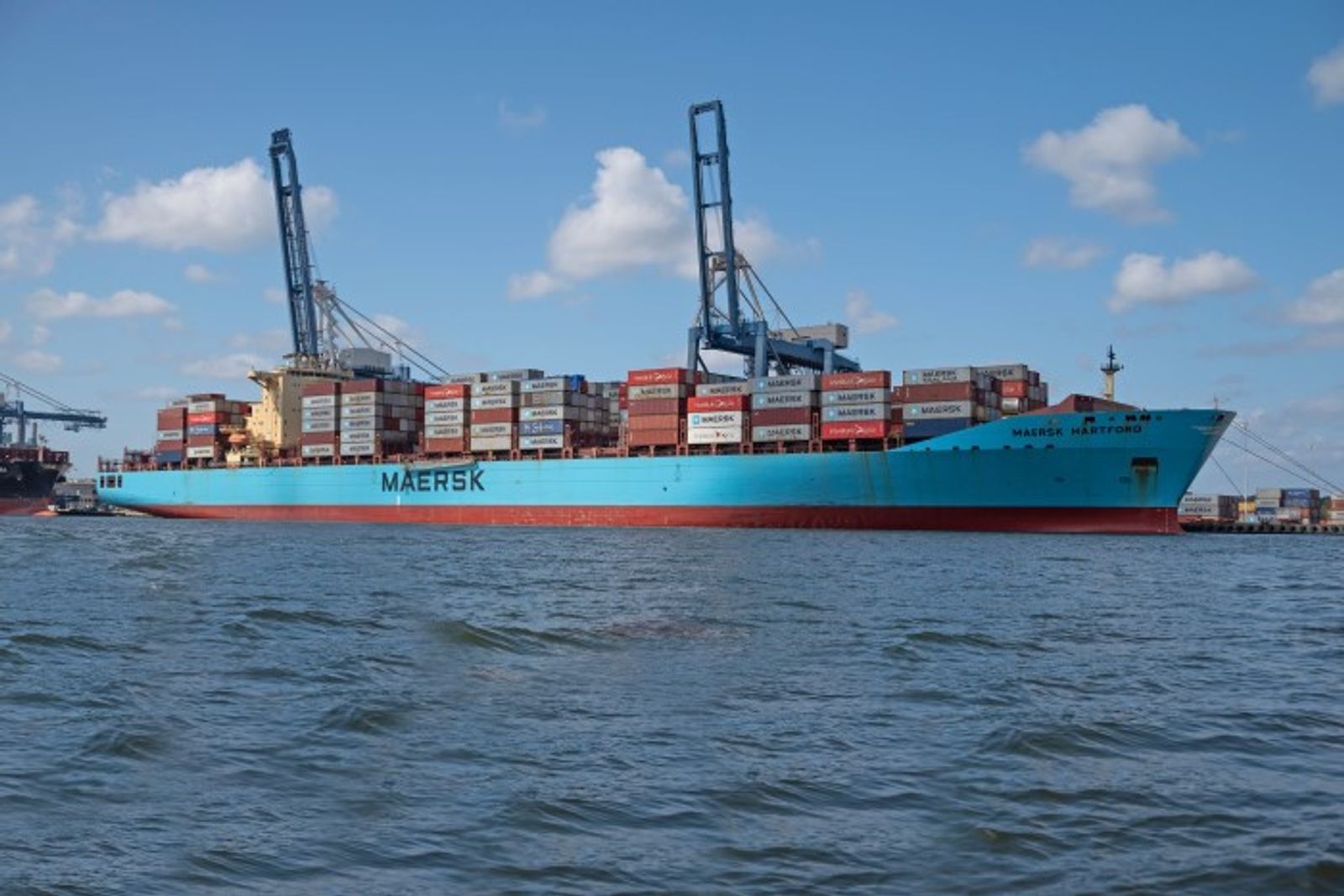
The Port of Charleston is taking the first step to bring big ships into its smallest container terminal by agreeing to a dredging study alongside the US Army Corps of Engineers.
The South Carolina Ports Authority (SC Ports) said Friday it signed an agreement with the US Army Corps to study dredging the Cooper River from its current 48-foot depth to 52 feet. The river leads into the North Charleston Terminal (NCT).
Charleston dredged its main harbor to 52 feet in 2022, allowing the port to handle two-way vessel traffic at its two other container terminals. SC Ports said dredging the Cooper River to the federally authorized depth for the harbor will allow the port “to handle the biggest ships at any tide, further enhancing port competitiveness.”
The North Charleston Terminal, the smallest by acreage of the port’s three terminals, has handled the port’s short-sea services from South and Central America.
But with the planned temporary idling of the Leatherman terminal this month, North Charleston is now also handling larger post-Panamax ship services from Europe, the Mediterranean and the Indian subcontinent.
SC Ports made the request to study dredging back in 2024, but the $500,000 federal portion of the funding only became available in the budget for the fiscal 2026 Water Resources Development Act. Ports typically fund the other half of dredging studies.
Along with the dredging, SC Ports would also need to raise the height of the Don Holt Bridge, which spans the Cooper River, to accommodate the largest vessels calling Charleston. SC Ports said in a statement to the Journal of Commerce it is in talks with the South Carolina Department of Transportation “to replace and raise the bridge as part of the modernization effort at [North Charleston Terminal].”
SC Ports has deferred plans for future container capacity at NCT, which can currently handle 500,000 TEUs, as it reviews capital spending plans. The port has instead opted to use a proposed expansion area near NCT for handling roll-on/roll-off vessels.