

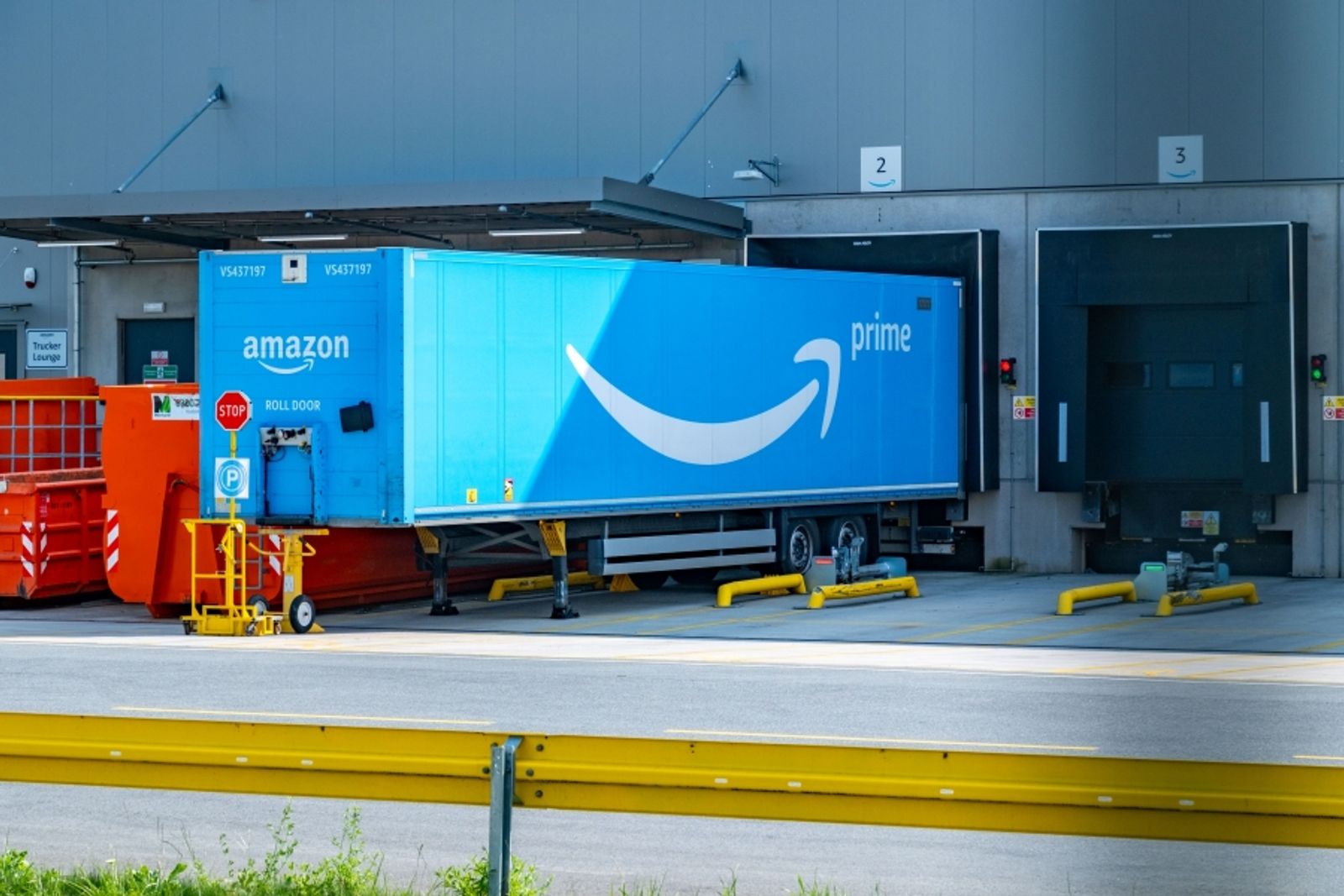
Amazon on Wednesday said it is rolling out a less-than-truckload (LTL) service that leaps the boundaries of its internal distribution and fulfillment network to deliver palletized freight to third-party warehouses, retailers and other consignee locations.
The LTL announcement builds on the launch of Amazon Supply Chain Services in May, when Amazon said it was opening its logistics capabilities to all businesses. The LTL service is part of Amazon Freight, offered alongside truckload and intermodal rail.
Amazon’s stated aspiration is to provide an LTL service that is integrated with its other ground transportation resources, including a drop trailer pool and equipment tracking technology. That ground network handles millions of shipments a year, Amazon said.
“Businesses now have the flexibility to ship by pallet, choosing LTL to share trailer space for partial loads,” Amazon said in a statement, adding the goal is to move freight faster and at a lower cost.
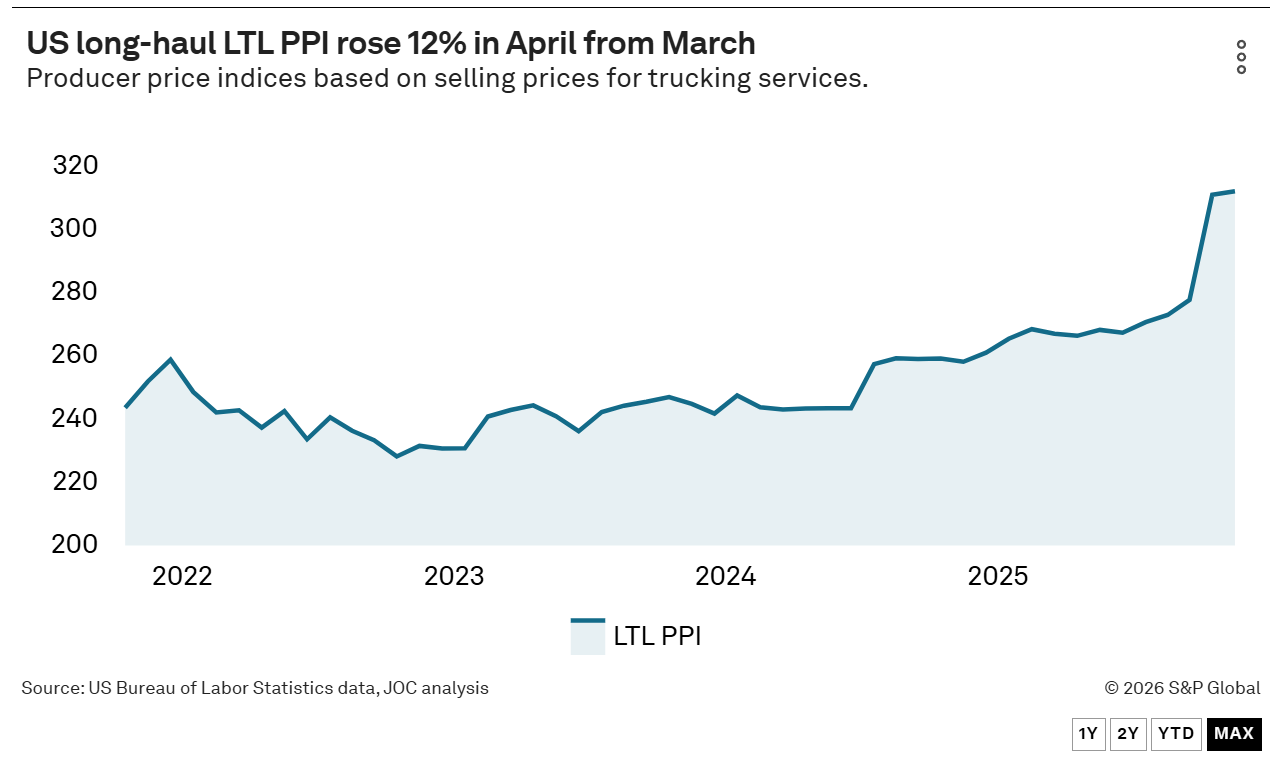
Amazon’s push into LTL comes at a time when LTL costs are rising, putting more pressure on shippers already paying higher truckload rates. The US long-distance LTL producer price index (PPI), a measure of all-inclusive pricing, rose 12% in April from March.
Amazon has offered limited LTL service to customers shipping freight to Amazon. Several shippers over the past year have told the Journal of Commerce they have been approached by Amazon looking for LTL business. That bid for LTL freight is now in the open.
Amazon’s official foray into LTL immediately hit LTL carrier stocks on Wall Street, with share values for FedEx Freight, Old Dominion Freight Line, XPO, ArcBest and Saia falling 2% to 3% on the New York Stock Exchange by mid-morning Wednesday.
Stocks of third-party logistics companies took a more glancing blow, with the share price of C.H. Robinson Worldwide — the largest US freight broker and a leading third-party LTL provider — dropping less than 2% by mid-morning Wednesday.
A third-party play
Those third-party logistics providers and brokerages — which have been playing an increasing role in the LTL sector — are more likely to feel the heat from Amazon’s competition than asset-based LTL carriers, sources told the Journal of Commerce.
“This is brokerage, and it doesn’t affect carriers like FedEx Freight, ODFL and XPO,” said Satish Jindel, president of transportation research firm SJ Consulting Group. “[Amazon is] trying to leverage being a large ‘collect’ LTL shipper and offer customers the lower rates they get.”
Jindel referred to the practice of being a pre-paid, or collect, consignee that pays carriers to move goods from suppliers or vendors to its own distribution centers and facilities. Many LTL carriers provide service to Amazon under pre-paid “collect” rates, he said.
“Amazon’s release is more similar to a well-packaged asset-lite LTL solution,” said entrepreneur Curtis Garrett, CEO of technology platform Lateral. “These are broad supply chain services with some focus in the marketing on LTL shipments.
“The layers of assets, real estate, technology and people that a Saia, XPO, ODFL or any other pure-play LTL carrier possess are not threatened here,” he added.
“This isn’t an employee-driver/asset-heavy attempt to carve out share of the core industrial-levered LTL market that standalone carriers thrive on,” Bascome Majors, an analyst at investment firm Stephens, said in a note to investors Wednesday.
Amazon does not have a physical LTL terminal network comparable to the leading LTL carriers, and its LTL service skews “retail-centric,” Majors said in the note. “Amazon isn’t becoming ODFL overnight, nor does that seem to be their aspiration,” he wrote.
But in an email sent late Wednesday, Amazon Freight Director Jim Ruiz said the LTL service is “asset-backed,” built on a fleet of Amazon-owned trailers and containers. Amazon has LTL facilities within its network and will use dedicated LTL drivers, the company said.
For the immediate future, Amazon is more likely to add to the competitive mix, adding to 3PL growth in the LTL space, rather than playing a major disruptive role. Non-asset logistics providers say they continue to make gains in the LTL market.
“LTL for us has grown significantly,” Jared Weisfeld, chief strategy officer at logistics provider RXO, told the Journal of Commerce. “It’s such a large market for 3PLs. We think there’s an opportunity to get LTL up to 40% to 50% of the mix over the long term.”