

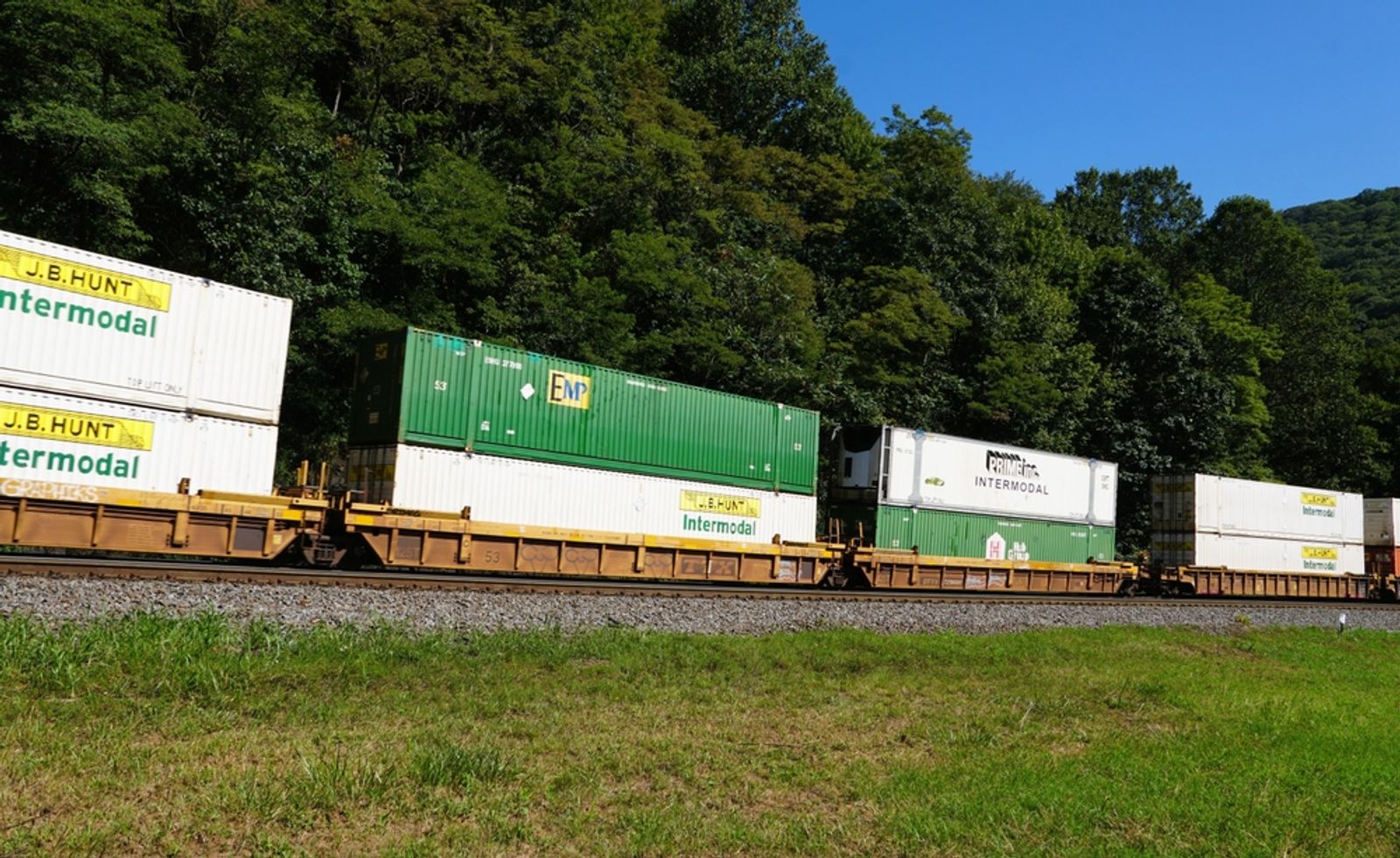
US domestic intermodal demand has rebounded sharply since the war with Iran began, with the growth coming, surprisingly, on lanes east of the Mississippi River rather than the long-haul West Coast corridors that typically offer the biggest fuel advantage over trucking.
Intermodal providers have historically struggled to compete with trucking in the eastern US because the shorter lengths of haul mean less cost savings than transcontinental moves. But railroads and intermodal marketing companies (IMCs) say rising fuel costs, higher rates amid the end of the four-year recession in the trucking industry, and reliable service are helping convert more freight to rail in the east.
Combined domestic container traffic in March and April was up 9% over the same period in 2025, according to the International Association of North America (IANA), a surge not seen since the pandemic-related lockdowns six years ago. Freight originating in the Northeast, South-Central and Southeast US have all jumped more than 10% year over year.
“You’re finally seeing us coming out of ... the worst trucking cycle that we’ve witnessed — at least the worst one certainly that I’ve seen,” Kevin Boone, CFO of CSX Transportation, said at the Bank of America Annual Industrials Conference on May 13. “We’re seeing [freight] start to convert over to rail and with our service product, we’re pretty optimistic that can continue here.”
The strongest gains have been concentrated in eastern corridors. Traffic from the Northeast to the Southeast jumped 17.7% year over year in March and April, according to IANA, while Southeast-to-Northeast traffic on the same corridor rose 16%. Midwest-to-Northeast volume increased 17.6%. Those are three routes where CSX will be able to better compete after beginning double-stack intermodal service through the Howard Street Tunnel in Baltimore earlier this month.
The upgrade allows CSX to compete better against Norfolk Southern (NS) on freight between Atlanta and Newark and cuts about a day from transit times between Chicago and Newark. That gives CSX a chance to capture more of the eastern demand upswing, along with private-asset intermodal partners such as J.B. Hunt Transport Services.
J.B. Hunt executives are signaling the same strong demand pattern in the east, with shippers beginning to save more money on freight in the region.
“The discount has grown from 15% to 20% in the last six to eight weeks,” Darren Field, the company’s president of intermodal, said this week at Wolfe Research’s Annual Global Transportation and Industrials Conference. “I don’t know that we can close that 20% discount gap back to 15% in just this cycle, but I would anticipate certainly our intermodal pricing opportunity to start to improve [in the 2027 bid cycle].”
Rebound tied to diesel prices?
The Journal of Commerce Intermodal Savings Index also showed the steepest increases in rail savings sequentially compared with truckload in March occurred in the eastern US.
Even so, Norfolk Southern cautioned that the rebound may be tied more to higher diesel prices than to a structural change, meaning it could fade if energy markets ease.
“If the war ends in the next couple of weeks and fuel prices start going back down over the next few months, does that dynamic persist or does it reverse back to where it was? Hard to say,” NS CEO Mark George said at the Wolfe Research conference.
Service will help determine whether intermodal keeps gaining share from trucking on the East Coast. CSX’s intermodal train speed was 7.2% faster from March through the first week of May than during the same period last year, while Norfolk Southern’s speeds were 1.1% slower over the same span, according to the Association of American Railroads.
A disruption at CSX’s Fairburn intermodal terminal in Atlanta in April sharply increased truck turn times, in some cases forcing drivers to wait hours and pushing deliveries to the next day. The issue has since been resolved.